Cracks, worn pavement, and recurring repairs can leave you wondering how much work your parking lot actually needs. Understanding asphalt overlay vs. replacement helps you evaluate your options before committing to a major paving project.
Asphalt Overlay vs. Replacement At a Glance:
- Asphalt overlay: Adds new asphalt over existing pavement that still has adequate underlying support.
- Asphalt replacement: Removes deteriorated asphalt so you can address deeper pavement problems.
- Which is right?: Pavement condition, underlying support, drainage, and the extent of damage help determine the right approach.
Cincinnati Asphalt works with commercial properties throughout Greater Cincinnati and the tri-state area to identify the right pavement solution for each site. Here’s what you should know when deciding whether an asphalt overlay or replacement is right for your property.
What Is an Asphalt Overlay?
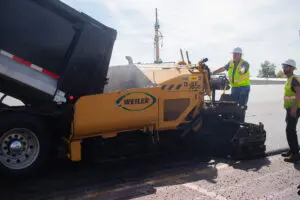
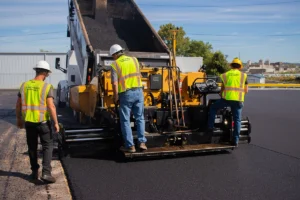
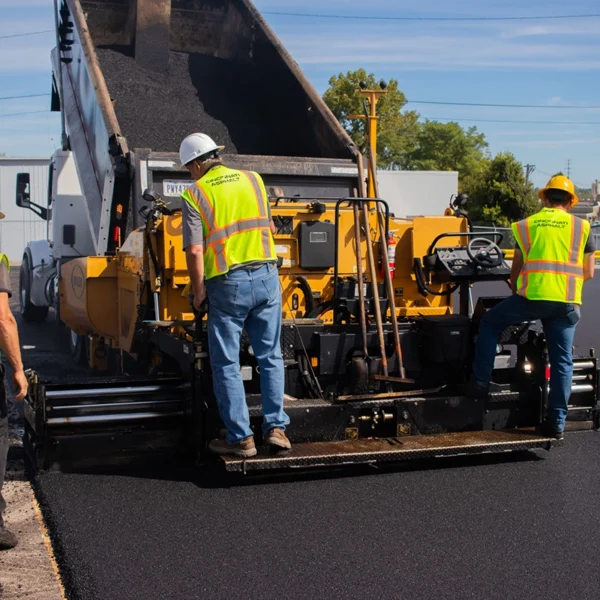
An asphalt overlay resurfaces existing pavement with a new layer of asphalt. The process typically includes preparing the surface, completing necessary repairs, applying a tack coat for bonding, and placing and compacting the new asphalt.
Unlike sealcoating, an overlay adds new pavement material rather than a protective coating.
Where Milling Fits Into the Process
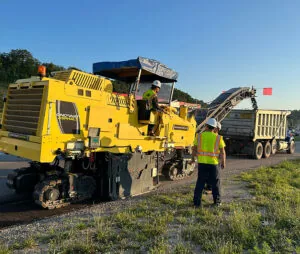
A mill and overlay removes a selected depth of existing pavement before installing new asphalt. Milling helps maintain elevations around curbs, entrances, drains, and accessible routes while preparing the surface for resurfacing.
However, milling doesn’t automatically correct deeper pavement failures or prevent every existing crack from returning. Asphalt milling and reclamation work together to address deeper structural failure and alligator cracking.
What Does Asphalt Replacement Involve?
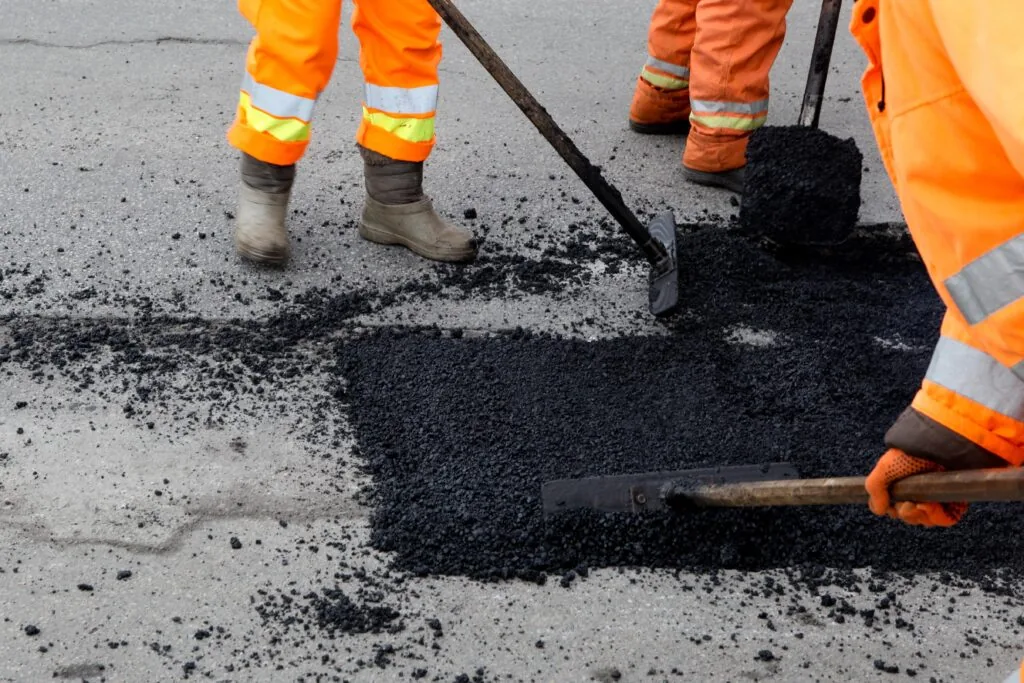
Asphalt replacement removes deteriorated pavement so professionals can evaluate and correct the supporting layers where necessary. For large projects like commercial parking lot paving, this may involve full replacement or targeted full-depth repairs in damaged areas.
Sound underlying materials don’t need to be removed simply because the surface pavement has failed.
How to Choose Between an Overlay and Replacement
Cracks, settlement, and worn pavement signal the need for an assessment, but surface damage alone doesn’t determine the right repair. Traffic loads, previous repairs, drainage, pavement structure, and Cincinnati’s seasonal temperature changes all influence the right approach.
When an Overlay May Be Appropriate
An overlay works best when deterioration affects mainly the surface, and the pavement below still provides adequate support for traffic. Contractors may repair localized failures before resurfacing, while areas with minor wear may require only maintenance or spot repairs.
When Replacement Deserves Closer Consideration
Widespread structural distress, recurring failures, or significant settlement often require deeper repairs or replacement. Alligator cracking signals pavement fatigue, but a thorough assessment determines whether inadequate support, water problems, or other underlying issues are causing the damage.
When Combining Treatments Makes Sense
Different sections of a commercial parking lot require different treatments. For example, a deteriorated loading area may require full-depth repairs. A structurally sound parking area, on the other hand, may still be suitable for an overlay, addressing deeper failures without unnecessarily removing sound pavement.
Asphalt Overlay vs. Replacement Cost: What Affects Your Budget?
Asphalt overlaying costs less upfront because it retains usable pavement and reduces removal, hauling, and reconstruction work. Project size, asphalt thickness, milling, base repairs, drainage work, access restrictions, and pavement markings all affect the final price.
Upfront cost alone shouldn’t drive the decision. Compare each option’s long-term value, expected maintenance needs, and ability to address the existing pavement conditions before choosing a scope.
Planning Around Parking Lot Closures and Long-Term Performance
Phased construction maintains access for customers, deliveries, and pedestrians while crews overlay asphalt or complete other paving work. Project scope, weather, and contractor instructions determine when each area reopens. Construction quality, traffic, drainage, and ongoing maintenance influence how the pavement performs over time.
Questions to Ask Before Approving a Paving Proposal
Before approving a paving proposal, make sure the recommended treatment matches your parking lot’s condition and addresses any underlying problems.
Ask the following questions:
- What pavement conditions support the recommended treatment?
- Does the scope cover preparation, compacted asphalt thickness, localized repairs, drainage, markings, and access planning?
- What exclusions, warranty terms, and maintenance recommendations apply?
For experienced commercial paving in Cincinnati, contact Cincinnati Asphalt to discuss your project and determine the right scope for your property.
Frequently Asked Questions
Can you overlay asphalt with alligator cracking?
An overlay alone does not address the underlying causes of alligator cracking. A contractor should evaluate the damage before resurfacing asphalt to determine whether deeper repairs or replacement make sense.
Is mill and overlay the same as asphalt resurfacing?
Mill and overlay is one way to resurface a parking lot with asphalt. Crews remove part of the existing pavement, then install and compact a new asphalt layer.
Is asphalt replacement always more expensive than an overlay?
As far as asphalt overlay vs. replacement cost, replacement is more upfront because it requires more removal and reconstruction. Preparation, repairs, materials, and site conditions determine the final cost of either option.
How long will an asphalt overlay last?
No single lifespan applies to every parking lot. Existing pavement, traffic, drainage, construction quality, and maintenance all influence long-term performance.
Does standing water mean my entire parking lot needs replacement?
Not necessarily. A contractor should identify the cause of ponding before recommending localized repairs, milling and resurfacing, or more extensive replacement.