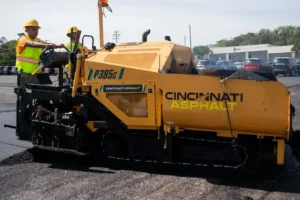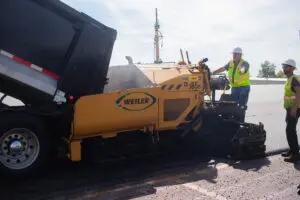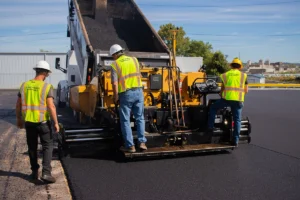
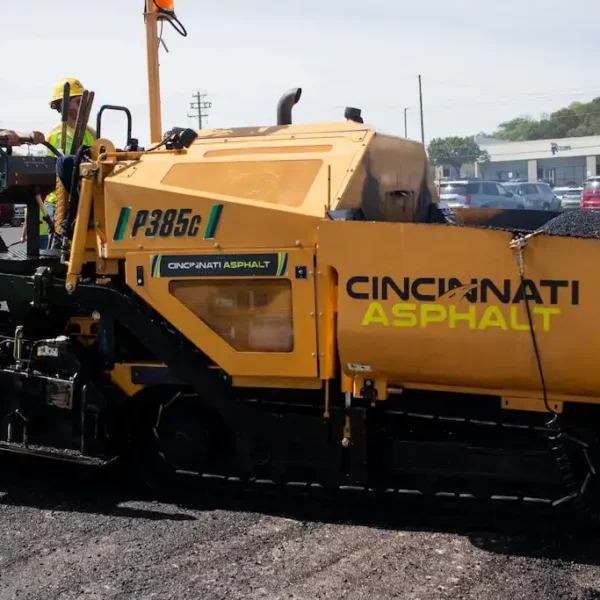
You can pave over existing asphalt if the underlying pavement is stable, surface damage is manageable, and the site has proper drainage. Asphalt overlay lets you install new asphalt over an existing parking lot or access road without tearing everything out.
But what if your parking lot has cracks, potholes, or areas where water collects? In this guide, we’ll explain how to tell whether your parking lot can be resurfaced, which pavement problems you should repair before resurfacing, and which ones may require more extensive work.
When Can You Put New Asphalt Over Old Asphalt?
An overlay may be suitable when your existing pavement meets these conditions:
- Stable Pavement Structure: The existing asphalt and base must be strong enough to handle daily traffic without shifting or failing.
- Manageable Surface Damage: Minor cracks and isolated damage are typically repairable before installing the overlay.
- Proper Drainage: Rainwater should flow off the pavement instead of collecting in low spots.
- Adequate Pavement Elevation: The new asphalt must leave enough clearance at curbs and maintain smooth transitions at entrances and catch basins.
- Traffic Demands: Loading areas and truck routes with heavy traffic may require additional repairs or a different pavement design.
What Problems Can Prevent Paving Over Existing Asphalt?
- Alligator Cracking: Cracks that resemble alligator skin often signal pavement fatigue and deeper structural problems. Crews typically need to repair or reconstruct these areas before paving over existing asphalt.
- Recurring Potholes: Potholes that keep coming back may signal problems beneath the surface. Patching and pothole repair services address isolated damage, but widespread pavement failure may require reconstruction.
- Settlement and Soft Areas: Sinking pavement or areas that shift under traffic may indicate problems with the base. Installing new asphalt over these spots won’t stop the pavement from settling again.
- Standing Water: Water that regularly collects near catch basins, parking aisles, or loading areas may indicate grading or drainage problems. These issues require attention before resurfacing.
Does Existing Asphalt Need to Be Milled First?
Not always. Milling creates room for new asphalt so the finished pavement lines up with curbs, entrances, and drainage structures. Some parking lots only need milling along the edges, while others require removing more of the existing surface.
For commercial parking lots, milling may be needed to:
- Remove Surface Deterioration: Mill away worn or rutted asphalt while preserving the sound pavement underneath.
- Maintain Curb Heights: Create enough room for new asphalt without raising the finished surface too high against existing curbs.
- Create Smooth Transitions: Tie the new pavement into entrances, adjoining surfaces, and access roads without abrupt elevation changes.
- Preserve Drainage: Maintain appropriate elevations around catch basins and drainage inlets so water can continue flowing off the pavement.
- Maintain Accessible Routes: Account for slopes and transitions in accessible parking spaces and pedestrian routes.
Milling works when the pavement underneath is still sound. If damage extends into the base, asphalt milling and resurfacing may not be enough. Widespread structural failure could require reconstruction or full-depth reclamation. The extent of the work also affects project planning, especially when businesses need to maintain vehicle access during paving.
Find Out Whether Your Parking Lot Can Be Resurfaced
With over a decade of commercial parking lot paving experience in the Tri-State area, Cincinnati Asphalt can help you determine whether you can pave over existing asphalt or if your pavement needs reconstruction. We’ll evaluate your pavement, identify trouble spots, and recommend the most effective solution.
Request an on-site estimate, and we’ll help you plan your next paving project with confidence.