- Commercial asphalt paving costs in Cincinnati vary for new installations depending on multiple factors.
- The biggest cost drivers include lot size, base condition, drainage requirements, asphalt thickness, and whether the project involves new construction or resurfacing.
- Resurfacing is often less expensive than full replacement when the existing base remains structurally sound. If the base has failed, replacement is usually the better long-term investment.
Commercial asphalt paving costs vary significantly from one project to the next. Factors such as pavement size, site preparation requirements, asphalt thickness, drainage improvements, and material costs all influence the final price. Proper pavement design is especially important in Cincinnati, where freeze-thaw cycles can accelerate cracking and pavement failure once water reaches the base layer.
This guide explains typical commercial asphalt paving cost ranges in Cincinnati, the factors that affect pricing, and when resurfacing may be a better option than full replacement. Any price ranges provided should be used as planning estimates rather than guaranteed pricing.
Table of Contents
What Does Commercial Asphalt Paving Cost Per Square Foot?
The average commercial asphalt paving cost per square foot depends on project size, site conditions, and pavement design requirements. Larger projects typically benefit from lower per-square-foot costs because equipment and mobilization expenses are spread across a larger area.
What's Included in the Per-Square-Foot Price?
Several factors contribute to concrete repair for parking lots throughout Ohio:
- Freeze-thaw cycles that expand trapped moisture inside cracks and joints
- Winter deicing materials that accelerate surface deterioration
- Heavy truck traffic, loading zones, and fleet vehicles that create repeated stress
- Poor drainage, soil settlement, and subbase erosion that cause slabs to shift or sink
3 Factors That Determine Your Commercial Paving Cost
1. Lot Size, Shape, and Accessibility
Larger lots generally cost less per square foot because equipment mobilization costs remain relatively fixed regardless of project size. Lots with tight access points, irregular layouts, or active traffic patterns may require additional labor and traffic control.
Input your approximate metrics into Cincinnati Asphalt’s commercial asphalt calculator to estimate your asphalt paving cost.
2. Existing Base Condition and Site Preparation
The condition of the existing base is one of the biggest cost variables. Lots with drainage problems, unstable subgrade, or structural failures often require additional base repairs or site preparation.
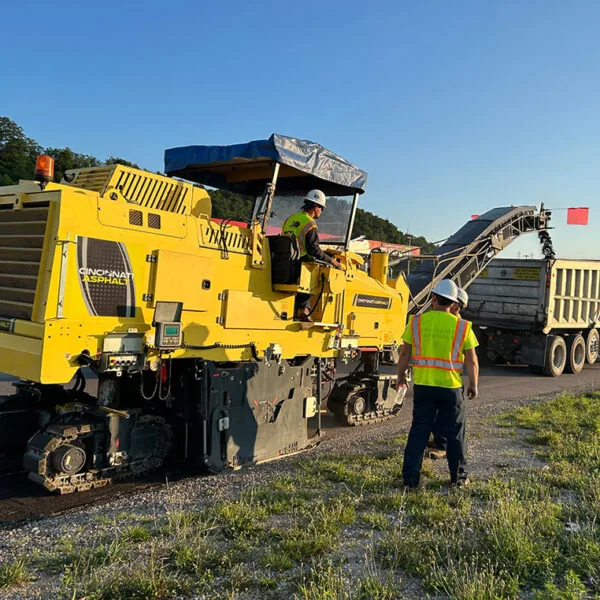
In some cases, milling and reclamation can provide a faster and less invasive alternative to full reconstruction.
3. Asphalt Thickness, Mix Type, and Load Requirements
Commercial parking lots typically require up to 2 inches of compacted asphalt over a properly prepared aggregate base. Heavy-use areas such as truck courts, loading zones, dumpster pads, and delivery routes often require thicker pavement sections and stronger mix designs.
How Much Does It Cost to Pave a Commercial Parking Lot in Cincinnati?
Commercial parking lot paving costs come with unique design requirements that can impact the final budget.
Cost Examples by Parking Lot Size
The average parking space size is roughly 8.5′ x 18′. At 153 square feet per space, asphalt parking lot costs vary significantly from a small retail lot with 20 spaces to a large commercial lot with 150 spaces.
Striping, Signage, and ADA Compliance Costs
Additional features that can impact final costs include parking lot striping, directional arrows, fire lane markings, and ADA-compliant signage for accessibility.
Resurfacing vs. Full Replacement for Existing Parking Lots
If your existing parking lot still has a stable foundation, resurfacing may provide a more affordable alternative to complete replacement. However, full-depth replacement is often the better long-term investment for pavement showing signs of structural failure.
New Installation vs. Asphalt Resurfacing: Which Costs Less?
One of the most common questions property owners ask is whether resurfacing or replacement offers the better value. Let’s break it down together.
Side-by-Side Cost Comparison
| Factor | New Full-Depth Installation | Mill-and-Overlay Resurfacing |
|---|---|---|
| Cost Per Sq. Ft. | Depends on specific project needs | Depends on specific project needs |
| Best For | New lots, failed base, major redesigns | Structurally sound lots with surface deterioration |
| Downtime | Longer | Typically shorter |
| Long-Term Performance | Depends on design, drainage, traffic, and maintenance | Depends on existing base condition |
When Ohio's Climate Tips the Decision
Cincinnati’s freeze-thaw cycles worsen pavement deterioration over time when water enters cracks or weak base areas, freezes, and expands. In many cases, resurfacing works well if the underlying structure is stable. However, lots with widespread alligator cracking, base failure, or chronic drainage issues often require reconstruction.
Timely commercial asphalt repair and routine sealcoating can help reduce long-term ownership costs and extend the life of your pavement.
Common Mistakes That Drive Up Commercial Paving Costs
-
Choosing the Lowest Bid Without Reviewing Scope
A significantly lower proposal may exclude important line items such as base repairs, drainage work, proper asphalt thickness, or traffic control. Comparing scope details—not just price—helps avoid unexpected costs later. -
Ignoring Drainage Problems
Paving over drainage issues rarely solves them. Water trapped beneath the pavement weakens the base, accelerating the formation of cracking, potholes, and structural failure. -
Delaying Maintenance Too Long
Waiting to address small cracks or isolated pavement damage often leads to more extensive repair needs. Preventive maintenance generally costs far less than full-depth replacement.
Ready For A Commercial Asphalt Paving Cost Estimate?
If you’re planning a commercial paving project, the best way to determine your actual cost is to schedule a professional site evaluation and get an estimate.
Get a written commercial paving estimate from our team at Cincinnati Asphalt. Contact us today.
FAQs
How much does commercial asphalt paving cost per square foot in Cincinnati?
Commercial asphalt paving cost in Cincinnati varies based on lot size, base condition, drainage needs, asphalt thickness, and material costs. Larger lots may have a lower per-square-foot cost because equipment, labor, and mobilization expenses are spread across more surface area. Final pricing should always be based on a site visit and a written quote.
How much does it cost to pave a 20-space parking lot?
The cost to pave a 20-space commercial parking lot depends on whether the project is a new installation, resurfacing, or full-depth replacement. Base condition, drainage requirements, striping, and ADA compliance will also impact the final cost, depending on whether additional repair work is needed.
Is resurfacing cheaper than replacing a commercial parking lot?
Resurfacing is often less expensive than full-depth replacement when the existing base is structurally sound and the damage is primarily limited to the pavement surface. If the base has failed or the drainage is poor, replacement is usually the better long-term solution.
What is the lifespan of commercial asphalt paving?
The lifespan of your commercial asphalt depends on installation quality, pavement thickness, base condition, drainage, traffic loads, maintenance practices, and exposure to Cincinnati’s freeze-thaw cycles. Pavement that receives regular crack filling, sealcoating, and timely repairs generally lasts longer than unmaintained pavement.
Does commercial asphalt paving require ADA compliance?
Commercial parking lot paving projects may need to meet ADA requirements, including accessible parking spaces, access aisles, signage, van-accessible spaces, and surface slope standards.